How to Maintain solar system in Pakistan? A Complete Guide
Solar energy systems are a smart investment for Pakistani homes and businesses, offering clean and affordable electricity while reducing dependency on the grid. However, to keep these systems working efficiently for years, solar system maintenance is essential.
A typical solar setup includes solar panels, a solar inverter, and a solar battery. Each part requires routine inspection and cleaning to ensure smooth energy production. Neglecting any component can affect the entire system’s output.
This guide explains how to maintain a solar system in Pakistan, provides simple solar panel maintenance tips for Pakistani homes, and outlines the best practices for solar maintenance to help you protect your investment and enjoy consistent, reliable energy.
Before starting any technical work, always consult a licensed electrician or solar technician for safety and professional handling.
How to Maintain a Solar System in Pakistan?
Regular maintenance is the key to ensuring your solar system continues to perform at its best throughout the year. Whether you use it for home or business, proper care can extend the life of your investment and improve energy efficiency.
In Pakistan, solar system maintenance is generally affordable and easy to manage. Homeowners can do basic cleaning and inspections every 2–3 weeks, especially in dusty or humid areas. A professional maintenance check every 12–18 months usually costs a small amount compared to the savings you get from a well-functioning solar setup.
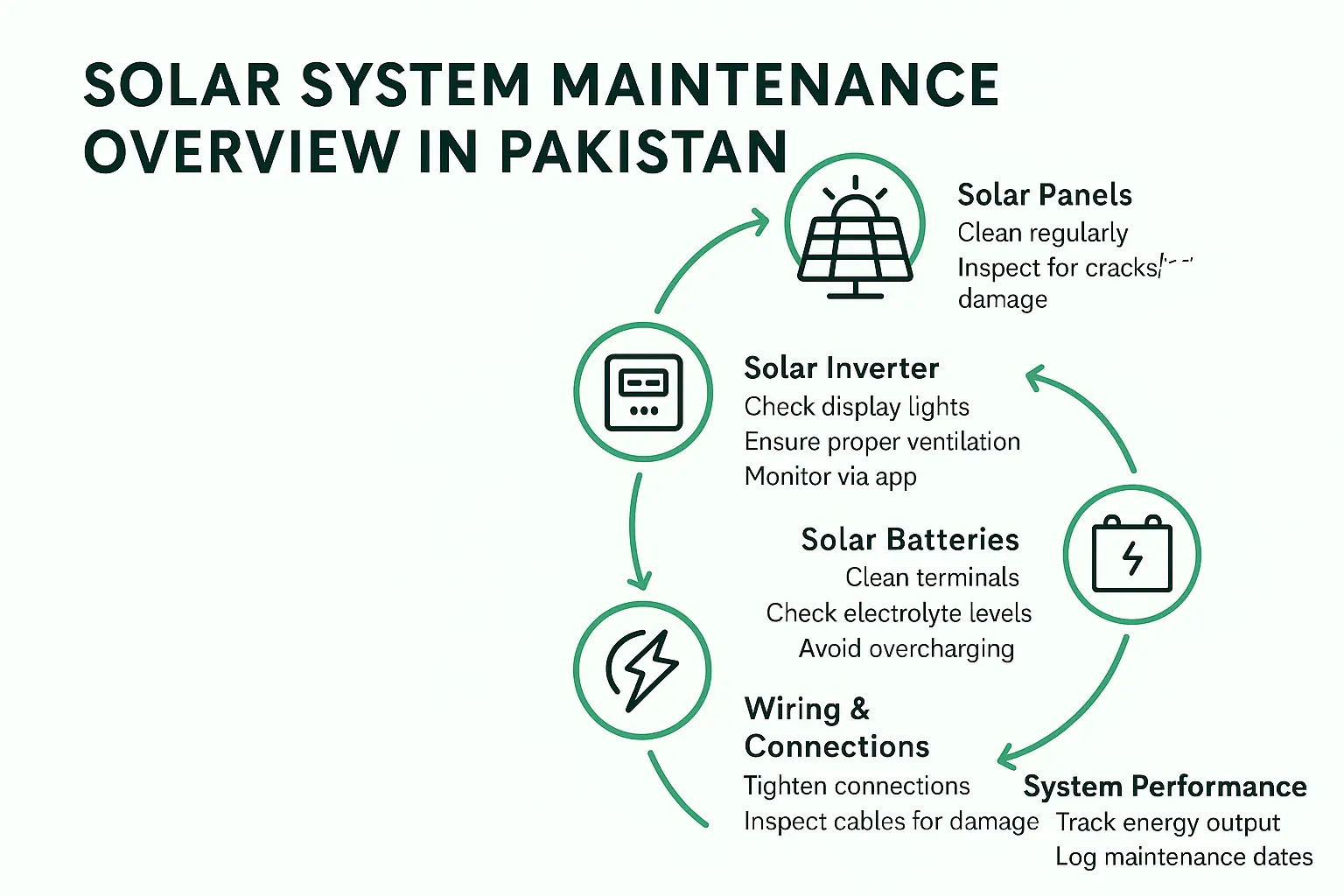
Maintaining a solar system in Pakistan involves keeping all key components, panels, the inverter, and batteries in optimal condition. Here’s a detailed look at what you should do:
1. Keep Solar Panels Clean and Dust-Free
Pakistan’s dusty climate can reduce panel efficiency by 20–30%. Clean panels every 2–3 weeks (weekly in very dusty areas) using a soft cloth or sponge with plain water, preferably in the early morning or evening. Inspect for cracks or loose frames during cleaning. Regular cleaning and quick damage checks are the simplest ways to maintain panel performance.
Inspect Panels for Damage
Over time, solar panels can develop small cracks, loose frames, or signs of wear due to weather or dust buildup. Check your panels every few weeks for any visible damage, discoloration, or loose parts. Even a small crack can reduce efficiency or allow moisture to enter. If you notice any damage, avoid touching the panel and contact a professional technician for repair or replacement. Regular inspection helps prevent bigger problems and ensures consistent performance.
2. Monitor the Solar Inverter Regularly
Your solar inverter converts DC electricity from the panels into AC power for home use. If the inverter fails or develops a fault, your entire solar system stops functioning properly.
- Check Display Lights: Most inverters have indicator lights or display panels showing performance and error codes. Red or orange lights signal a problem get it checked immediately.
- Software Monitoring: Many modern inverters come with mobile apps or dashboards that show power generation, battery status, and daily output. Keep an eye on any unusual drop in performance.
- Cooling and Ventilation: Ensure the inverter is installed in a well-ventilated place, away from direct sunlight or moisture. Overheating can shorten its lifespan.
3. Maintain Solar Batteries
If your solar setup includes batteries (especially off-grid or hybrid systems), proper maintenance ensures backup power and longer battery life.
- Clean Terminals: Check battery terminals for corrosion or buildup. Clean gently with a dry cloth or baking soda solution.
- Check Electrolyte Level: For lead-acid batteries, monitor electrolyte levels regularly. Top up with distilled water if needed.
- Temperature Control: Keep batteries in a cool, shaded area. Extreme heat shortens battery lifespan, a common issue in many Pakistani regions.
- Periodic Inspection: Have a technician test battery voltage and charging capacity every few months.
- Avoid Overcharging or Deep Discharging: Follow the manufacturer’s guidelines for charging cycles to maintain capacity.
Maintaining solar batteries properly ensures your system delivers power even during cloudy days or power outages.
4. Inspect Wiring and Connections
Loose or damaged wiring can lead to energy loss or even fire hazards. Pakistan’s high temperatures can also cause cables to expand or degrade faster.
- Check Cables: Inspect for cracks, discoloration, or melting.
- Tighten Connections: Make sure all connections between panels, the inverter, and the battery are firm.
- Professional Servicing: Get an electrician or solar technician to perform a full inspection at least once a year.
5. Track System Performance
Regular monitoring helps detect issues before they become serious. Keep a simple logbook or use your inverter’s tracking software to record:
- Daily or weekly energy output
- Any irregular drops in production
- Cleaning and maintenance dates
If you notice a sudden decline in energy generation, it might be due to dirt buildup, shading, or technical faults.
Regular and Specialized Solar System Maintenance
Basic or regular maintenance includes simple tasks that homeowners can handle cleaning solar panels, checking for loose connections, and inspecting visible parts for dirt or damage. Doing these small checks regularly keeps your system efficient and helps avoid expensive repairs in the long run.
However, specialized maintenance should always be done by professionals. This includes inverter servicing, battery testing, wiring inspection, and other technical work that requires expertise and safety precautions. Attempting these tasks without proper knowledge can be risky for both the user and the system.
Climate-Based Solar Panel Maintenance Tips for Pakistani Homes
Pakistan’s weather brings unique challenges for solar system owners. From intense summer heat to dusty winds and monsoon rains, these environmental factors can affect your system’s performance. Here are some best practices for solar maintenance suited to local conditions:
- Avoid Shading and Debris: Trim trees or remove leaves and branches that block sunlight. Even partial shading can reduce your power output.
- Use Rainwater Smartly: Rain helps wash dust from panels, but inspect afterward for mud or residue buildup.
- Protect Against Birds: In some urban areas, pigeons may nest under panels. Install bird guards or mesh to prevent wire damage.
- Secure the Mounting Frame: Strong winds or storms can loosen bolts or mounts. Check them regularly for stability.
- Inspect After Storms: After heavy rain or dust storms, examine your panels for dirt, cracks, or displaced mounts.
- Seasonal Check-Ups: Schedule an extra inspection before summer and after monsoon season to keep efficiency high.
Solar System Maintenance Checklist
Now that you’re familiar with the best practices for solar maintenance, here’s a simple checklist to help you keep your entire system, including solar panels, inverters, and batteries, in top condition. Regular checks ensure long-term performance, reliability, and safety, especially in Pakistan’s challenging climate.
1. Monitor Energy Production (Monthly)
Use your system’s monitoring app or inverter display to track daily and monthly energy output. If you notice sudden drops, it may indicate dust on panels, wiring faults, or inverter issues.
2. Inspect Inverter Lights (Monthly)
Check that the inverter’s indicator lights show normal operation. Any warning or error signals should be addressed quickly to avoid performance loss.
3. Clean Solar Panels (Every 3–6 Months)
Remove dust, bird droppings, or debris that block sunlight. Cleaning panels early in the morning or late evening prevents heat stress and ensures maximum energy absorption.
4. Inspect for Physical Damage (Quarterly)
Look for cracks, discoloration, or corrosion on panels and mounting frames. Early detection helps prevent costly replacements later.
5. Professional System Check (Every 2–3 Years)
Hire a certified solar technician for a full inspection. They’ll check all electrical connections, inverter performance, and battery health to ensure everything runs safely and efficiently.
6. Trim Nearby Vegetation (Annually)
Cut back trees or shrubs casting shadows on your panels. Even partial shading can reduce the system’s overall efficiency.
7. Post-Storm Inspection (As Needed)
After heavy rain, wind, or dust storms, check the panels and mounting structure for loosened bolts, displaced panels, or visible dirt accumulation.
8. Maintain Battery Backup (Quarterly)
If your solar system includes batteries, check fluid levels (for non-lithium models), clean terminals, and ensure proper ventilation to avoid overheating.
9. Keep Records
Maintain a small log of all cleaning, inspections, and maintenance work. Keeping track helps identify patterns and ensures consistent performance over time.
Conclusion
Maintaining your solar system in Pakistan goes beyond just cleaning the panels; it’s about preserving your investment and ensuring reliable renewable energy for years. Regular inspections and professional servicing help your solar panels, inverter, and batteries perform efficiently in Pakistan’s challenging climate.
With consistent maintenance, you can lower energy costs, extend system life, and enjoy safe, uninterrupted power. Switching to solar is a smart step toward sustainability. Maintaining it wisely makes it a long-term solution for your home or business.
FAQs About Solar System Maintenance in Pakistan
1. How often should I clean and maintain my solar system in Pakistan?
Clean your solar panels every 2–3 weeks, or weekly in dusty areas, using plain water and a soft cloth in the early morning or evening. Schedule a professional inspection once a year to check the inverter, wiring, and batteries. This routine ensures efficiency and long-lasting performance in Pakistan’s climate.
2. Does rain clean solar panels automatically?
Rain can wash away some dust, but often leaves mud or residue. Always inspect and clean panels after rain for optimal performance.
3. What should I check during the monsoon season?
Look for loose wires, watermarks, or dirt after storms. Quick inspections prevent damage and keep energy output steady.
4. How do I know my solar system needs maintenance?
If energy output drops, inverter lights show warnings, or batteries show corrosion, it’s time for a check-up.
5. Should I clean panels myself or hire a professional?
Perform basic panel cleaning yourself, but hire a certified technician for inverter, wiring, and battery checks.
6. What is the ideal maintenance schedule?
Monthly basic checks and an annual professional inspection are enough to maintain system efficiency and safety.