What is a hybrid solar system? Working & Block Diagram
Solar energy is now one of the most trusted and affordable sources of electricity. Around the world, people are switching to solar systems to reduce electricity costs and become more energy independent. However, when choosing the right type of solar setup, many homeowners get confused between on-grid, off-grid, and hybrid systems.
In 2025, hybrid solar systems are emerging as the top choice for both homes and businesses. With rising electricity prices and increasing concerns about climate change, these systems offer the perfect balance between savings and reliability. According to recent industry reports, hybrid setups now account for more than 35% of new solar installations globally, as they provide continuous power, efficient energy management, and long-term cost benefits.
Among all solar options, the hybrid system stands out as a modern, reliable, and flexible energy solution. It combines the advantages of both on-grid and off-grid systems, ensuring a steady power supply and lower energy bills. If you’re wondering what a hybrid solar system is and how it works, let’s explore it in simple terms.
Hybrid Solar System Definition
The hybrid solar system definition is simple: it’s a solar power setup that combines both on-grid and off-grid features. This means it can work with the main electricity grid and also store power in batteries for later use. During the day, solar panels generate electricity, and any extra power gets stored in batteries. When it’s dark or cloudy, the system automatically uses the stored energy or switches to the grid.
A hybrid solar system is a smart and reliable choice for anyone who wants an uninterrupted power supply. It works perfectly in areas with frequent power cuts or changing weather. By combining solar panels, battery storage, and a grid connection, it ensures continuous electricity, helps lower bills, and promotes an eco-friendly lifestyle for both homes and businesses.
Hybrid Solar System Meaning
The hybrid system’s meaning refers to a combination of two power sources — solar energy and the utility grid. This system intelligently decides when to use solar power, when to charge batteries, and when to draw energy from the grid. The main goal is to ensure an uninterrupted electricity supply and to lower monthly bills.
How Does a Hybrid Solar System Work?
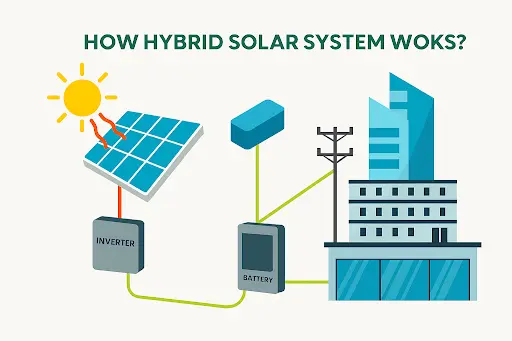
A hybrid solar system works by generating, storing, and using electricity efficiently through a combination of solar panels, batteries, and a grid connection. It’s designed to give you a constant power supply, whether it’s sunny, cloudy, or during power cuts.
Step-by-Step Working Process
1. Solar Panels: These panels capture sunlight and convert it into electricity that powers your home or business.
2. Hybrid Inverter: The inverter manages how electricity is used — sending it to your home, charging the batteries, or exporting it to the main power grid.
3. Battery Bank: Extra energy produced during the day is stored in batteries (usually lithium-ion or lead-acid) for use at night or during outages.
4. Grid Connection: When solar and battery power are not enough, your system automatically draws electricity from the main grid to ensure uninterrupted power.
This smart combination allows a hybrid system to provide energy independence and reliability all year round.
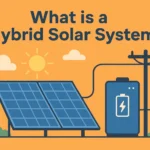
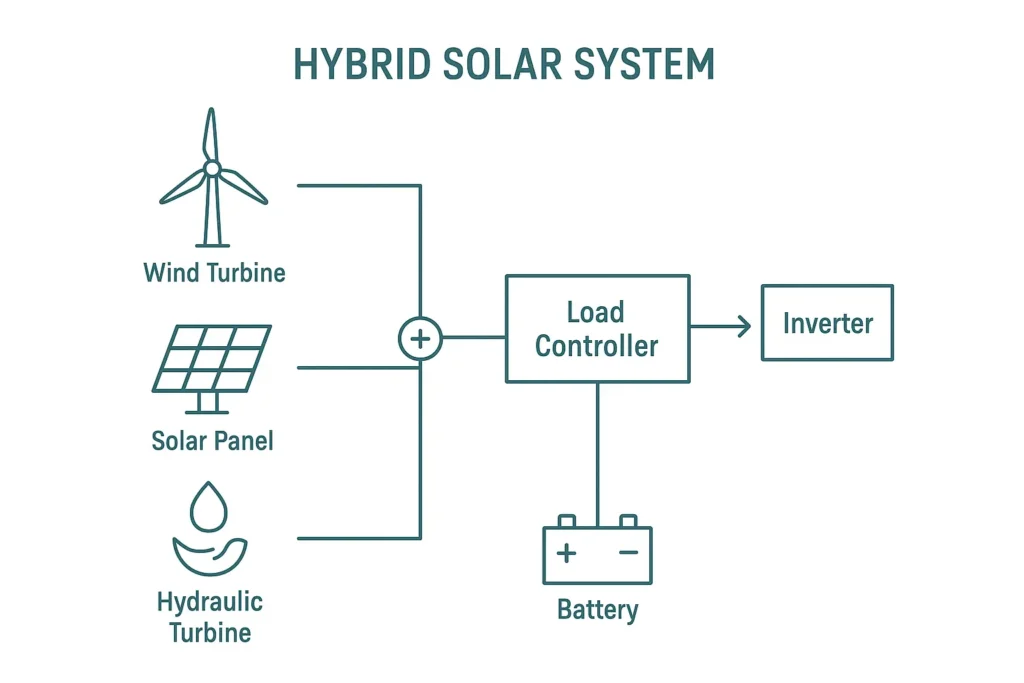
Hybrid Solar System Block Diagram
Top Benefits of a Hybrid Solar System
A hybrid solar system offers a smart mix of solar power, battery backup, and grid connection — making it one of the most reliable and flexible solar solutions available today. Below are its key advantages explained simply:
1. Continuous Power and Energy Independence
A hybrid solar system provides a steady electricity supply — even during power cuts or cloudy weather. By storing extra energy in batteries and drawing from the grid when needed, it ensures 24/7 power availability. This gives you true energy independence and peace of mind in all conditions.
2. Lower Electricity Bills and Smart Savings
Hybrid systems reduce monthly energy costs by using free solar energy during the day and stored power at night. Through net metering, you can send extra electricity back to the grid and earn credits, further lowering your bills. The inverter also optimizes power use for maximum savings.
3. Eco-Friendly Energy and Grid Support
Hybrid solar systems promote sustainable living by cutting carbon emissions and reducing fossil fuel use. They not only supply clean energy to your home but can also send extra power back to the grid, helping stabilize local electricity demand and supporting the community.
4. Cost-Effective and Practical Setup
Compared to off-grid setups, hybrid solar systems are more affordable and require smaller batteries since the grid remains available as backup. This balance makes them a cost-effective solution for both homes and small businesses.
5. Smart Energy Management and Monitoring
Modern hybrid systems use intelligent inverters that manage and monitor energy flow in real-time. You can track how much solar power you generate, how much you use, and when to rely on stored energy — helping you make data-driven energy decisions.
6. Long Lifespan and Easy Maintenance
Hybrid systems are durable, requiring minimal maintenance thanks to high-quality components like lithium-ion batteries and efficient solar panels. With proper care, they can deliver reliable energy for decades.
7. Flexible and Scalable Design
You can start small and expand later — hybrid systems are designed for scalability. Whether for a single home or a growing business, this flexibility ensures long-term adaptability.
Limitations and Challenges of a Hybrid Solar System
While hybrid solar systems are reliable and efficient, understanding their challenges helps you make a smart decision before installation.
1. Higher Upfront Cost
The inclusion of batteries and hybrid inverters makes the system more expensive than traditional on-grid setups. However, rebates and incentives like the Federal Solar Investment Tax Credit (ITC) can reduce costs significantly.
2. Complex Installation and Setup
Professional installation is required to connect panels, batteries, and the grid safely. This increases installation time and cost but ensures proper performance and system safety.
3. Battery Maintenance and Replacement
Batteries are the most sensitive and expensive components. They typically last 8–10 years and require periodic checks to maintain efficiency. Opting for lithium-ion batteries offers better performance and longer life.
4. Space and Compatibility Issues
Hybrid systems need adequate space for panels, batteries, and inverters. Over time, newer battery or inverter models may not always be compatible with existing setups, requiring future adjustments.
5. Limited Load Handling
Depending on size and design, hybrid systems might not power all heavy appliances simultaneously. Managing load wisely and using efficient devices helps avoid power shortages.
Drawbacks Summary Table
| Challenge | Possible Solution |
| High upfront cost | Use federal or state rebates |
| Battery replacement | Choose lithium-ion with a longer lifespan |
| Complex installation | Hire certified solar installers |
| Limited space | Opt for compact wall-mounted batteries |
Main Components of a Hybrid Solar System
To understand what a hybrid solar system is, it’s important to know how each part works together to provide continuous and reliable energy. A hybrid solar system combines solar power, batteries, and the grid — giving you the best of both on-grid and off-grid systems. Below is a simple explanation of the key components that make it work efficiently.
1. Solar Panels – Capturing Sunlight Efficiently
At the heart of every hybrid solar system are solar panels. These panels capture sunlight and convert it into DC electricity using photovoltaic (PV) cells. The process, known as the photovoltaic effect, occurs when sunlight energizes electrons inside the PV cells, producing a flow of electricity. This clean and renewable energy becomes the main power source for your home or business.
2. Hybrid Inverter – The Smart Power Manager
A hybrid inverter plays a central role in controlling and managing power flow. It converts the DC electricity from the panels into AC electricity, which powers your home appliances.
Unlike a regular inverter, a hybrid inverter also manages energy from multiple sources — solar panels, battery storage, and the utility grid — ensuring smooth and balanced energy distribution. It acts as both a converter and a charge controller.
3. Battery Storage – Storing Energy for Later Use
Battery storage is one of the main features that define the hybrid solar system. High-capacity lithium-ion or lead-acid batteries store extra solar energy produced during the day. This stored energy is used at night, during cloudy weather, or when power outages occur. Regular battery maintenance ensures longer life and consistent performance.
4. Grid Connection – Ensuring Backup Power
A grid connection keeps your hybrid system flexible and reliable. When solar production is low or battery power runs out, your system automatically draws electricity from the grid.
Likewise, when your panels generate excess energy, it can be sent back to the grid — often earning you credits or financial benefits through net metering programs. This smart connection ensures you always have a stable power supply.
5. Energy Meter – Tracking and Optimizing Usage
An energy meter helps monitor how much electricity your hybrid solar system generates and consumes. It records both incoming and outgoing power, allowing you to track savings and manage energy more efficiently. With smart monitoring, you can adjust usage patterns and improve your system’s performance.
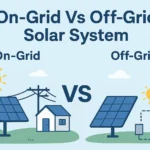
Hybrid Solar System vs On-Grid and Off-Grid Systems
To fully understand what is a hybrid solar system, it helps to compare it with other popular types — on-grid and off-grid solar systems. Each type has its own setup, benefits, and limitations, but the hybrid solar system stands out for its flexibility and reliability.
1. On-Grid Solar System – Dependent on the Power Grid
An on-grid solar system (also called a grid-tied system) connects directly to the utility grid. It generates electricity from solar panels during the day, and any excess power is sent back to the grid, often earning credits through net metering.
However, the system does not include batteries, so it cannot store power. If there’s a power outage, the system stops working because it depends entirely on the grid connection.
2. Off-Grid Solar System – Total Energy Independence
An off-grid solar system operates completely independently from the grid. It relies on solar panels and batteries to generate and store electricity.
This setup is ideal for remote areas where grid access is limited or unavailable.
The main drawback is that it depends entirely on batteries — once the stored power runs out, there’s no backup source. That’s why maintaining sufficient battery capacity is essential for continuous power.
3. Hybrid Solar System – The Perfect Combination
A hybrid solar system combines the best features of both on-grid and off-grid setups. It connects to the grid for backup power but also includes a battery bank to store excess solar energy.
This means your home can use solar power during the day, store energy at night, and grid electricity when needed — ensuring an uninterrupted power supply in all situations.
In simple terms, the hybrid solar system refers to a system that provides energy independence like an off-grid setup and grid support like an on-grid system. It’s a smart, balanced solution for modern energy needs.
4. Why the Hybrid Solar System Is the Most Reliable Choice
Among all three options, the hybrid solar system offers the greatest flexibility. It saves money by using stored solar power, provides backup during outages, and reduces grid dependency.
This blend of efficiency, reliability, and sustainability makes it a top choice for both homes and businesses.
In short, the hybrid solar system definition can be summed up as:
“A solar power solution that connects to both the grid and batteries, offering continuous energy, backup support, and maximum efficiency.”
Smart Ways to Save Energy with a Hybrid Solar System
A hybrid solar system doesn’t just give you reliable power — it also helps you lower your electricity bills when used wisely. By understanding what a hybrid solar system is and how it functions, you can make the most of its battery storage and grid connection to save energy effectively.
Here’s how you can maximize your savings:
1. Use High-Power Appliances During Daylight Hours
Run heavy appliances such as washing machines, dishwashers, or irons during the day when your solar panels are actively generating electricity.
This allows you to use direct solar energy instead of pulling power from the grid or battery, helping reduce energy costs and battery wear.
2. Take Advantage of Net Metering Benefits
If your utility company offers net metering, your hybrid solar system can send excess solar power to the grid during the day. In return, you receive credits that reduce your future electricity bills when you draw energy at night or during cloudy hours.
This feature perfectly complements the hybrid solar system, efficient energy use with flexible grid support.
3. Store Energy for Peak-Rate Hours
In areas with time-of-use or peak electricity pricing, the battery of your hybrid solar setup can store solar energy for use during those expensive hours.
Instead of paying high rates, you’ll be using your own stored power — saving money while reducing grid dependency.
4. Choose Energy-Efficient Appliances
Switch to energy-efficient LED lights, refrigerators, and air conditioners. These appliances consume less power, allowing your stored battery energy to last longer and your panels to cover more of your daily energy needs.
5. Monitor and Maintain Battery Health
Regularly check your battery’s charge level and avoid overusing it unnecessarily. Proper monitoring prevents damage, extends battery life, and ensures your system remains cost-efficient in the long run.
6. Adjust Usage Patterns for Maximum Efficiency
Plan your household energy use wisely — run energy-hungry devices during sunny hours and reduce consumption during peak evening times.
Combining this practice with net metering and battery storage can significantly increase your overall energy savings.
Environmental Impact of Hybrid Solar Systems
Hybrid solar systems play a vital role in promoting eco-friendly and sustainable energy use. By combining solar power generation with smart battery storage, they significantly reduce reliance on fossil fuels and traditional electricity sources. This means fewer greenhouse gas emissions and a smaller carbon footprint for both homes and businesses.
Unlike conventional grid power — which often depends on coal or natural gas — hybrid systems utilize clean, renewable energy throughout the day and store solar power during the night. This continuous use of renewable energy minimizes the demand for non-renewable resources, helping combat climate change and air pollution.
For homeowners and organizations focused on sustainability and green living, hybrid solar systems are an effective and responsible way to contribute to a cleaner, healthier planet while enjoying long-term energy savings
Investment and Cost Factors
The cost of a hybrid solar system depends on capacity, battery size, and location. Though initial setup costs are higher, long-term savings from reduced electricity bills and incentives make it a wise investment.
Governments and private organizations also offer solar rebates, net metering benefits, and green energy loans, helping reduce the overall financial burden.
Conclusion
Hybrid solar systems offer the perfect balance between energy independence, cost savings, and sustainability. They’re ideal for modern homes and small businesses that want reliable power without relying completely on the grid.
By combining solar energy, battery storage, and smart grid connection, hybrid systems are paving the way toward a cleaner, smarter, and greener future.