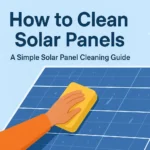
How to Clean Solar Panels: A Simple Solar Panel Cleaning Guide
Solar energy offers a dependable way to generate electricity, but to keep your system running efficiently, it’s essential to know how to clean solar panels the right way.Over time, dust, birds, and debris can make your solar panels dirty and block sunlight, which reduces your solar panel efficiency .. In some areas where there does not rain for 2 to 3 months, then in this area panels are dirtier, which also affects their performance.
Cleaning of solar panels increases the efficiency up to 5-10%. Regular maintenance and cleaning of solar panels increases the lifetime of your solar system in years and keeps it safe, and its performance is best. When you know that properly how to clean solar panels it ensures that it will absorb maximum sunlight and generate more electricity. When you clean panels, it not only works efficiently but also lasts longer and saves you money in the long run.
In this solar panel cleaning guide, we will provide you with why solar panel cleaning is important and the best way to clean solar panels safely, and also provide you with some safety tips before cleaning the panels. Let’s get started!
Why Cleaning Solar Panels Is Important
Cleaning solar panels is important because when you clean solar panels, it increases the efficiency by absorbing more sunlight and gives you a high output. It increases the lifespan of solar panels and can extend the life of your investment. It ensures that when your panels operate at peak efficiency, more electricity is generated and increasing your savings on energy bills.
To keep your warranty valid, the manufacturer should require routine maintenance and cleaning of panels, so when people ignore the cleaning of their panels regularly, they could void their warranty, and you are responsible for their repair and replacement costs. When you regularly clean your panels, you can easily find other issues like cracks, loose wiring. catching these types of minor problems early can prevent you from larger and expensive repairs in the future.
How Often Should You Clean Your Solar Panels?
Solar panels should be cleaned at least twice a year but the perfect time to clean your solar panels depends on the environment and region where you live .For example panels in dusty and polluted area may need frequent cleaning while the panels in rainy regions might only need it once a year or less.
Dusty or polluted area:
If you are living in dusty or polluted area clean your panels in every 3 months looks for excessive dust or residue from nearby construction ,highways or farms,
Areas with lots of trees
If you are living in the area where lots of trees are occur, then you should clean your panels at lest twice a year,especially when removing leaves, after the fall,bird droppings and pollen.
Rainy or coastal areas:
When you are living in the rainy areas, it may be sufficient to clean the panels, so you may only need to clean them once a year.
Deciding the Right Time to Clean Solar Panels:
For cleaning panels, instead of following the fixed schedule, the best time to clean them according to their appearance and monitoring performance.
You should clean your panels when you notice these things:
Visible dirt:
If you look for obvious signs of dirt, water spots, grime,or bird droppings on the surface of the panels, and if you can see debris from the ground, so it is time for a cleaning.
Decreased Energy Output:
When you are looking for signs of cleaning your panels, the best way is to do a simple test. To compare the results, first track your panels’ production for a few days before you clean them. Then clean the panels thoroughly. After a few days, check your production data again. You’ll know cleaning helped if your solar system makes noticeably more electricity afterward. In places with a lot of dust, even one cleaning can make a big, positive difference in how much power you get.
Production test:
When you are looking for signs of cleaning your panels, the best way is to do a simple test. To compare the results, first track your panels’ production for a few days before you clean them. Then clean the panels thoroughly. After a few days, check your production data again. You’ll know cleaning helped if your solar system makes noticeably more electricity afterward. In places with a lot of dust, even one cleaning can make a big, positive difference in how much power you get.
Safety Steps Before Cleaning Solar Panels
Before cleaning solar panels, several essential safety precautions must be taken to avoid electrical hazards, slips, and panel damage.
- Electrical Safety
When you clean a solar panel, it may seem easy, but actually it is not an easy process. It is critical to take different safety measures to prevent electrical shock and make the process safer and prevent damage to the equipment.
Electrical Safety:
Turn off the system: When you clean your solar panels then always turn off your system first to avoid the risk of a short circuit.
- Shutting Off AC and DC Power
- Shut down your solar system by turning off the AC and DC breakers.
Portable panels: Disconnect them from any power station or battery
Wait for the shutdown:When your system is turned off, then you should wait for some time for any remaining electricity to dissipate before starting your cleaning process.
Watch for live cables: Even with the system off, remember that surrounding cabling may still be “live.” Be careful not to touch or damage any wiring.
Check for damage:When you start cleaning solar panels, you should inspect the panels for any cracked glass and loose connections.
- Height Safety and Personal Protection
Check roof safety first: If your solar panels are kept on the roof so you should first consider the height and danger in reaching the roof.
Use the right safety tools:if you clean the panel by yourself, you should use a strong ladder for it. For cleaning the panels at a very high height, use the fall arrest system, in which we have horns and safe anchor points.
Wear proper footwear: To prevent yourself from falling and slipping, wear non-slippery sleepers, especially when the surface is wet or slippery.
4. Clean Safely from the ground: If possible, clean the panels from the ground. For this purpose, use extendable tools. This method is secure and diminishes the danger of falling.
5. Avoid stepping on solar panels: When we step on solar panels, cracks arise on it, which damage the photovoltaic cells present inside these panels.
Smart Cleaning Conditions and Safety Tips
Pick the Perfect Cleaning Time:Clean the panels in the early morning or evening when the panels are cool and when the panels are not under direct exposure. When you apply cool water to hot panels can cause thermal shock and crack the glass.
Weather Safety Before Cleaning:Clean panels only in good weather. Avoid cleaning in rain, strong winds, and extremely hot weather because it may cause you to slip or get injured.
Choose the Proper Water Type:For cleaning the panels, use purified and demineralized water so that no water spots or mineral buildup is left behind.
Essential Tools and Equipment for Cleaning
Collect the Right Cleaning Tools:Before cleaning solar panels, you should prepare your tools in advance. Ensuring you have a soft-bristle brush, a Soft-flow water sprayer (avoid pressure washers), a Soft sponge or microfiber cloth, environmentally safe liquid cleaner.
Follow the Manufacturer’s Cleaning Instructions:Before cleaning, you should follow the instructions of the manufacturer to ensure you use approved methods and cleaners, which keep your warranty valid and protect your solar system investment.
The Best Way to Clean Solar Panels: A Simple Step-by-Step Guide
Cleaning solar panels properly helps to maintain their efficiency. Here’s a clear and safe process anyone can follow:
1. Pick the Perfect Time to Clean
When you clean your solar panels choose the perfect time to clean. Always choose the cool weather or clean the panels in the early morning or late in the evening. Avoid cleaning panels in direct sunlight because cold water on hot panels can cause cracks and also avoid evaporating water, which leaves streaks.
2. Power Down Before You Begin
Always shut down your solar power system before cleaning .This small step keeps you safe from any electric shock while washing.
3. Prepare Your Cleaning Kit
Using the appropriate tools:soft-bristle brush, a Soft-flow water sprayer (avoid pressure washers), a Soft sponge or microfiber cloth, environmentally safe liquid cleaner.
4. Start with a Gentle Wash
Begin by spraying clean water over the panels to remove loose dust and leaves. Then gently scrub the panels using sa oft-bristle brush or sponge. Starting from the top and working your way down. Gentle cleaning helps remove grime without scratching the surface.
5. Give a Final Rinse
Once the dirt is gone, rinse the panels again with clean water to remove soap residue. This helps maintain a streak-free shine and prevents buildup that can affect performance.
6. Check for Any Issues
After cleaning, take a few minutes to inspect the panels for any missed spots, cracks, or loose wiring. Early detection of small issues can save you expensive repairs later.
7. Stick to a Regular Cleaning Routine
Clean your panels at least two to four times a year. If you live in dusty, coastal, or polluted areas, schedule cleanings more often to keep efficiency high.
8. Call in the Experts When Needed
If your panels are difficult to reach or heavily soiled, consider hiring professionals. A professional cleaning once or twice a year ensures safety and thorough maintenance.
Conclusion:
Regular cleaning of solar panels increase the efficency and life span of solar panels. When panels stay clean, they capture more solar energy, generate more power, and keep your investment safe. When you know how to clean solar panels properly, your system absorbs more sunlight and delivers greater energy output.Timely cleaning with the right equipment enhances efficiency and helps avoid expensive maintenance, ensuring your solar system stays effective and dependable.