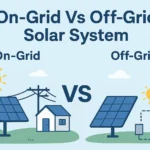
On-Grid Vs Off-Grid Solar System: Which One Is Right for You?
Solar energy is becoming a popular choice around the world, including in Pakistan, as more people look for clean and cost-effective power solutions. Homeowners and businesses are turning to solar systems to save on electricity bills and reduce their carbon footprint. However, when planning to install solar panels, many face a common question: which is better, an on-grid or vs off-grid solar system? An on-grid system connects directly to the main electricity grid and doesn’t need batteries, while an off-grid system works independently and uses batteries to store energy. Understanding the difference between on-grid vs off-grid solar systems is essential to choosing the right option that best fits your energy needs, location, and lifestyle.
What is an on-grid solar system?
An on-grid solar system, also known as a grid-tied system, is directly connected to the main electricity grid. It is one of the most popular choices for homes and businesses. This system allows you to use solar power during the day and automatically switch to grid electricity at night or when sunlight is low.
Unlike other systems, it doesn’t need batteries. Any extra energy your panels produce is sent back to the utility grid, and you receive credits or payments through net metering or a feed-in tariff (FiT). A solar inverter converts the DC power from your panels into usable AC power for your home and also transfers surplus electricity back to the grid.
However, it doesn’t work during a power outage for safety reasons. Overall, the on-grid solar system is affordable, low-maintenance, and ideal for areas with a stable power supply. Understanding on-grid vs off-grid solar systems helps you choose the right option based on your energy needs and budget.
How an On-Grid Solar System Work?
If you understand what is an on-grid solar system, it becomes easy to see how it produces and manages electricity. This type of solar setup is directly connected to the main electricity grid and does not need batteries. Below is a simple step-by-step explanation of how it works:
1. Solar Panels Capture Sunlight
The system starts with solar panels that absorb sunlight and convert it into direct current (DC) electricity. These panels are usually installed on rooftops or open areas that get maximum sunlight.
2. Inverter Converts DC to AC Power
The DC electricity produced by the panels flows to a solar inverter, which changes it into alternating current (AC) — the same type of electricity used to run home appliances and electronic devices.
3. Power for Home or Business
The AC electricity then moves into the building’s main electrical panel, from where it powers lights, fans, and other appliances. If the solar energy is enough, your home runs completely on solar power during the day.
4. Net Metering – Sending Excess Energy to the Grid
When your solar panels produce more power than you use, the extra energy is automatically sent to the utility grid through a process called net metering. This allows you to earn credits or reduce your electricity bill, depending on your state’s solar policy.
5. Grid as a Backup Source
At night or during cloudy days when your panels aren’t producing enough energy, the system draws power from the main grid, ensuring you always have electricity.
Energy Flow of an On-Grid Solar System
Sunlight → Solar Panels → Inverter → Home Appliances → Utility Grid (via Net Metering)
Advantages of an On-Grid Solar System
Understanding what on grid solar system is helps you see why it’s one of the most preferred solar setups today. Here are some of the main benefits explained in simple terms:
1. Affordable and Easy to Install
An on-grid solar system is more budget-friendly because it doesn’t need expensive batteries or extra storage equipment. The connection with the local grid makes the setup simpler and lowers the initial installation cost, making it an economical choice for homes and businesses.
2. No Need for Battery Storage
Since the system is directly connected to the main grid, you don’t have to invest in costly batteries. The grid itself acts as a virtual storage system, supplying power when your solar panels aren’t generating enough energy—like during cloudy days or at night.
3. Earn and Save with Net Metering
One of the biggest advantages of on-grid vs off-grid systems is net metering. When your panels produce more electricity than you use, the extra energy is sent back to the grid. In return, you earn credits or payments, helping you lower or even eliminate your electricity bills.
4. Continuous and Reliable Power Supply
With an on-grid setup, you never run out of electricity. During the day, your home runs on solar power, and when sunlight is low, you automatically draw power from the grid. This ensures a steady and reliable energy supply without interruptions.
5. Suitable for Urban and Suburban Areas
Because on-grid solar systems depend on grid access, they work best in cities and suburban locations where the power supply is stable. They are ideal for people who may not have enough space or budget for a large, independent system but still want to reduce their electricity costs.
6. Environmentally Friendly Options
Sharing your excess solar power with the grid helps reduce dependency on fossil fuels. This not only cuts down carbon emissions but also supports cleaner, renewable energy production for the community.
7. Extra Income Opportunities
In some regions, owners of on-grid systems can earn additional income by selling Solar Renewable Energy Credits (SRECs) generated by their systems. This makes solar power not just environmentally beneficial but also financially rewarding.
Disadvantages of an On-grid Solar Systems
While an on-grid solar system offers many benefits, it also has some limitations that are important to understand before installation. Knowing these drawbacks can help you make a fair comparison between on-grid vs off-grid solar systems and choose what suits you best.
1. No Power During Outages
Even though you have solar panels, an on-grid system cannot supply electricity when there’s a power outage. For safety reasons, it automatically shuts down to prevent energy from flowing back into the grid, which could endanger utility workers. Once the grid is restored, the system automatically turns back on.
2. Depends on Grid Availability
An on-grid solar system relies on the main electricity grid for continuous operation. This means it won’t work in areas where there’s no grid access or frequent power failures. If your location faces unstable electricity, this system may not be the best option.
3. Limited Energy Independence
Since the system doesn’t include batteries, you’re not completely independent from the grid. During the night or on cloudy days when solar production is low, you must draw electricity from the grid to meet your needs.
4. No Backup Power Option
Unlike off-grid systems, an on-grid setup doesn’t provide backup power during blackouts. To enjoy electricity even when the grid fails, you would need to install a hybrid system with battery storage, which adds extra cost.
5. Not Suitable for Remote Areas
Because it depends entirely on grid connection, the on-grid solar system is not ideal for rural or remote regions where electricity access is limited or unavailable. In such locations, an off-grid solar system would be a better and more reliable choice.
What is an off-grid solar system?
An off-grid solar system works independently and is not connected to the main electricity grid. It produces power through solar panels and stores it in batteries for use at night or on cloudy days. This makes it perfect for remote areas or places with an unreliable power supply.
The system includes solar panels, batteries, an inverter, and a charge controller. It can also have a backup generator for emergencies. Although it provides complete energy independence, it is usually more expensive than an on-grid system because of battery costs.
In short, when comparing on-grid vs off-grid solar systems, the off-grid setup is ideal for people who want full control over their energy use and freedom from electricity bills, especially in areas without grid access.
How an off-grid solar system work?
To understand what is an off-grid solar system, imagine a solar setup that works completely independently without relying on the main electricity grid. It is ideal for remote areas or locations where power outages are common. Here’s a step-by-step explanation of how an off-grid solar system works:
1. Solar Panels Capture Sunlight
Just like in an on-grid setup, solar panels collect sunlight and convert it into direct current (DC) electricity. These panels are usually installed on rooftops or open spaces with plenty of sunlight.
2. Charge Controller Regulates Power
The DC electricity generated by the panels flows to a charge controller. This important device controls how much energy goes into the batteries, prevents overcharging, and ensures the system runs safely and efficiently.
3. Battery Bank Stores Energy
The battery bank stores the excess energy produced during the day. This stored power is then used at night or on cloudy days when the panels cannot generate enough electricity, providing a continuous power supply.
4. Inverter Converts DC to AC
When electricity is needed, the inverter converts the stored DC power from the batteries into alternating current (AC) — the standard type of power used to run home appliances, lights, and devices.
5. Distribution Panel Supplies Power to Home
The AC electricity then flows into the distribution panel, from where it powers all connected appliances and electrical loads — even in remote or off-grid locations.
6. Backup Power Option (Optional)
In some areas with high energy needs or during extended cloudy periods, additional backup generators or storage systems can be connected to provide extra support when the batteries are low.
Energy Flow of an Off-Grid Solar System
Sunlight → Solar Panels → Charge Controller → Battery Bank → Inverter → Home Appliances
Advantages of off-grid solar systems
1. Complete Energy Independence
One of the biggest advantages of an off-grid solar system is that it works completely independently from the electricity grid. You don’t rely on government power or utility companies, which means you have full control over your energy production and usage.
2. Perfect for Remote Locations
If you live in an area where grid electricity is not available or is too costly to install, an off-grid system is the best choice. It provides reliable power in remote villages, mountains, farms, or other areas with no grid connection.
3. No Monthly Electricity Bills
Since an off-grid solar setup does not use the main grid, you don’t have to pay any monthly electricity bills. After the initial setup cost, your energy becomes almost free, saving money in the long run.
4. Reliable Power During Outages
Unlike on-grid systems, which stop working when the grid goes down, an off-grid solar system continues to supply electricity through its battery storage. This ensures a consistent and reliable power source even during power cuts or emergencies.
5. Sustainable and Environment-Friendly
An off-grid solar setup promotes a clean and renewable energy lifestyle. By generating and using solar power, you reduce dependency on fossil fuels and help protect the environment.
Disadvantages of Off-Grid Solar System:
1. High Initial Cost
An off-grid solar system requires batteries, inverters, and charge controllers — which makes it more expensive than an on-grid setup. The high cost of batteries and equipment increases the overall installation budget, especially for larger systems.
2. Expensive Battery Maintenance
Since the system stores electricity in batteries, regular maintenance or replacement is needed after a few years. This adds extra cost and effort compared to on-grid systems, which don’t need batteries.
3. Limited Power Storage
The electricity supply in off-grid solar systems depends entirely on stored battery energy. During long cloudy days or in winter when sunlight is low, batteries may run out, causing limited or no power supply.
4. Not Suitable for High Energy Demand
Off-grid systems are not ideal for homes or businesses that use a lot of electricity. Running multiple heavy appliances may require a large number of batteries and solar panels, which can become costly and take up more space.
5. No Backup from the Grid
Unlike an on-grid solar system, which can draw power from the grid when needed, an off-grid setup has no backup connection. If your batteries are empty, you’ll have no electricity until the sun shines again or until you use a backup generator.
On-Grid vs Off-Grid Solar Systems: Understanding the Key Differences
Both on-grid and off-grid solar systems help you produce your own electricity using sunlight, but they work differently depending on your location, budget, and energy needs.
Let’s look at how these two systems differ in performance, cost, and practicality.
1. Connection Type and Power Source
An on-grid solar system (also known as a grid-tied system) is directly linked to the local electricity grid. It uses solar energy when available and automatically switches to grid power when solar production is low — such as at night or on cloudy days.
In contrast, an off-grid solar system runs completely independently. It uses batteries to store solar power for later use, making it perfect for remote areas where grid electricity isn’t available.
2. Electricity Availability and Dependability
With an on-grid system, you always have access to electricity as long as the grid is working. When solar energy isn’t enough, your system automatically draws power from the grid.
However, off-grid systems rely only on battery-stored energy. You get power when there’s sunlight or when the battery is charged — meaning energy use must be managed carefully to avoid running out of electricity.
3. Excess Energy Management
In an on-grid solar setup, any extra power your panels produce is sent back to the utility grid. Thanks to net metering, you can earn energy credits or lower your electricity bills.
In an off-grid setup, extra electricity is stored in batteries for future use. But during long cloudy periods, if the batteries drain, the power supply can become limited.
4. Backup During Power Outages
One of the biggest differences between on-grid off off-grid solar systems is power backup.
An on-grid system shuts down automatically during a blackout to protect utility workers from electrical hazards.
On the other hand, off-grid systems keep running because they don’t rely on the grid — providing continuous power even during outages.
5. Electricity Bills and Savings
An on-grid solar system helps reduce or even eliminate your monthly bills through net metering, though you might still pay a small grid service fee.
Meanwhile, off-grid systems have no electricity bills at all since they’re fully independent. However, their initial setup cost is higher because of the batteries and energy storage systems required.
6. Installation Cost and Maintenance
On-grid systems are usually cheaper and easier to maintain because they don’t need batteries. They also require less equipment, making installation straightforward.
Off-grid systems, however, involve higher costs due to batteries, inverters, and controllers. Battery maintenance or replacement every few years also increases the long-term expense.
7. Which Solar System Fits You Best
Choose an on-grid solar system if you live in a city or town with reliable electricity and access to net metering programs.
Opt for an off-grid solar system if you’re in a remote or rural area with frequent power cuts or no grid connection at all.
Both systems are eco-friendly and reduce your carbon footprint — the right choice depends on your location, budget, and energy goals.
Comparison Table: On-Grid vs Off-Grid Solar Systems
| Factors | On-Grid Solar System | Off-Grid Solar System |
| Connection to Power Source | Connected directly to the main electricity grid. Uses solar energy during the day and grid power at night or when sunlight is low. | Works independently from the grid. Stores solar energy in batteries for nighttime or cloudy days. |
| Electricity Access | Provides continuous electricity as long as the grid is active. | Depends only on solar panels and battery storage, suitable for areas with no grid access. |
| Excess Energy Handling | Extra power is sent to the grid through net metering, reducing or eliminating your electricity bill. | Excess power is stored in batteries for later use. Once batteries are full, extra energy can go unused. |
| Backup During Power Outages | Shuts down automatically during grid failures for safety reasons. | Keeps running during outages since it doesn’t depend on the grid. |
| Electricity Bills | Low or zero bills through net metering, but a small service fee may apply. | No electricity bills at all — completely independent from the utility grid. |
| Installation & Maintenance Cost | Lower installation cost and less maintenance, as it doesn’t need batteries. | Higher setup cost due to batteries and more maintenance requirements. |
| Best Suitability | Ideal for cities and areas with reliable grid connection and net metering. | Best for rural, remote, or off-grid locations where grid power is unavailable. |
Which Solar System Is Better: On-Grid or Off-Grid?
When deciding between on on-grid vs off-grid solar system, consider your needs and lifestyle.
If you live in an urban or suburban area with stable electricity and net metering options, the on-grid system is best. It’s affordable, low-maintenance, and helps reduce your bills.
If you live in a remote area with limited grid access or frequent blackouts, an off-grid solar system is ideal. It offers complete energy independence and uninterrupted power, even during outages.
Both systems are great for generating clean energy — your choice depends on whether you prefer cost savings or energy independence.
Factors to consider when choosing between on-grid and off-grid solar systems
1. Choosing the Right Solar System for Your Area
Your location plays a big role in deciding between on-grid vs off-grid solar systems.
If you live in an area with a stable electricity connection, an on-grid solar system is more practical since it connects directly to the main grid.
However, if you live in a remote location or face frequent power outages, an off-grid solar system is the better choice as it can generate and store its own power without relying on the grid.
2. Cost Comparison: On-Grid vs Off-Grid Solar Systems
Your budget is another key factor. An on-grid solar system is generally more affordable because it doesn’t require costly batteries or extra storage equipment.
On the other hand, an off-grid solar system demands a higher initial investment since it includes batteries, charge controllers, and inverters — but it provides complete energy independence. It’s important to balance your budget with your long-term energy goals before making a choice.
3. Which Solar System Matches Your Energy Demand?
Think about your daily power consumption and how critical an uninterrupted power supply is. If your energy needs are moderate and you can depend on the grid, an on-grid solar system is ideal.
However, if you need a continuous power supply, such as in rural areas or for farms, an off-grid solar system with strong battery backup ensures reliable energy even during cloudy days or at night.
4. Maintenance Difference Between On-Grid and Off-Grid Solar Systems
Maintenance is another aspect that differentiates on grid vs off grid systems.
On-grid solar systems are easier to maintain since they don’t use batteries that require regular upkeep. In contrast, off-grid solar systems need routine checks and maintenance for batteries and inverters to keep them running efficiently.
If you prefer a low-maintenance setup, an on-grid option might be more convenient.
5. Check Solar Subsidies and Net Metering Before Installation
Before choosing your solar system, check local government policies and solar incentive programs.Many regions offer subsidies for solar installations and net metering benefits for on-grid users, allowing them to earn credits by sending excess energy back to the grid.
Understanding your local solar policies can help you save money and make a smarter investment.
6. Energy Independence or Grid Connection — What’s Better for You?
Your energy goals will define the type of system you need. If you aim for total energy independence and want to live off the grid, an off-grid solar system is perfect. But if your goal is to reduce electricity bills while staying connected to the main supply, an on-grid solar system will be more suitable.Both systems are eco-friendly and help lower your carbon footprint. It just depends on how independent you want your energy source to be.
7. Hybrid Solar Systems: A Smart Mix of On-Grid and Off-Grid Power
If you’re unsure whether to go fully on-grid or off-grid, a hybrid solar system can be a great solution. It combines the benefits of both using the grid when needed and storing power in batteries for backup. Hybrid systems offer flexibility, reliability, and long-term savings, making them a balanced choice for many homeowners.
Frequently Asked Questions (FAQs)
Q1: Which solar system is cheaper?
An on-grid solar system is more affordable because it doesn’t need batteries. Off-grid systems are costlier due to energy storage components.
Q2: Can an off-grid system be used in the city?
Yes, but it’s not usually necessary. Off-grid systems are meant for areas with poor or no grid access.
Q3: Does an on-grid system work during power outages?
No, it automatically shuts down when the grid goes off. To get backup power, you can choose a hybrid solar system.
Q4: Which one is more eco-friendly?
Both systems are environmentally friendly since they generate clean energy from sunlight and reduce carbon emissions.
Q5: What if I want both grid connection and battery backup?
You can go for a hybrid solar system, which combines the benefits of both on-grid and off-grid systems.
Conclusion:
Choosing between on-grid vs off-grid solar systems depends on your location and energy needs. If you have a reliable power connection, an on-grid solar system is cost-effective and helps reduce electricity bills through net metering.
However, if you live in a remote area or want full energy independence, an off-grid solar system is the better choice as it stores energy in batteries for use anytime.
Both options offer clean, renewable power and long-term savings. Understanding what an on-grid solar system is and what an off-grid solar system is will help you make the best choice for a sustainable and reliable energy future.